We can't find the internet
Attempting to reconnect
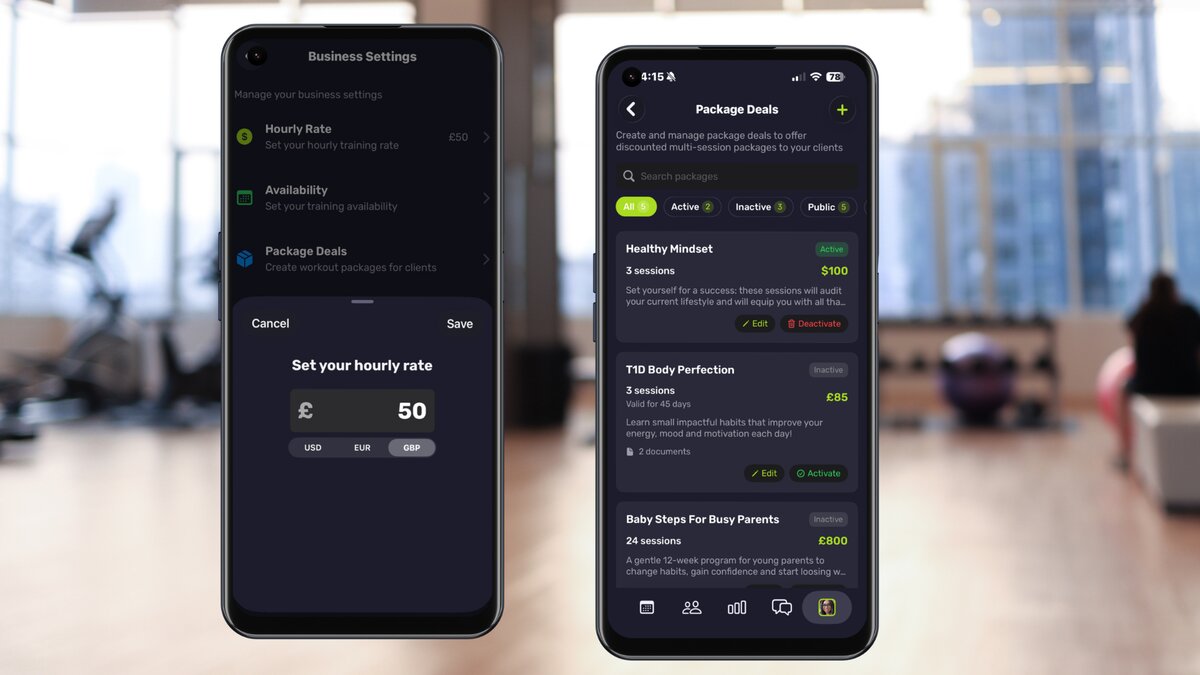
How Much Should You Charge for Online Personal Training in 2026?
Pricing is the question every personal trainer agonises over when they go independent. Charge too little and you undervalue your expertise, burn out, and attract clients who do not respect your time. Charge too much too early and you struggle to fill your books.
The good news: there is a framework for getting this right, and it has nothing to do with what your competition charges.
What Online PT Actually Costs to Deliver
Before you set a price, understand your costs. Online personal training has low overhead compared to gym-based work, but it is not free. Factor in your software subscription, continuing education, content creation time, admin, and the unpaid hours you spend on client communication. If you charge £150 a month for coaching but spend 5 admin hours per client, your effective hourly rate is £10. That is not a business.
A sustainable online PT business typically requires an effective hourly rate of at least £35–50 per hour of work delivered.
UK Market Rates in 2026
Here is what the market looks like*:
Entry-level online coaching (new trainers, basic programming): £100–150/month
Mid-level online coaching (2–5 years experience, niche focus): £200–350/month
Premium online coaching (specialist, proven results, strong brand): £400–700/month
1:1 live virtual sessions: £40–80 per session depending on experience
Note that these are online rates. In-person PT in London typically runs £60–120 per session. If you are transitioning from in-person to online, you should not simply replicate your per-session rate as a monthly subscription — the value proposition is different.
* These figures reflect indicative market ranges based on current industry observation and are intended as a starting point, not a precise benchmark.
Stop Focusing on Hourly Rate Pricing
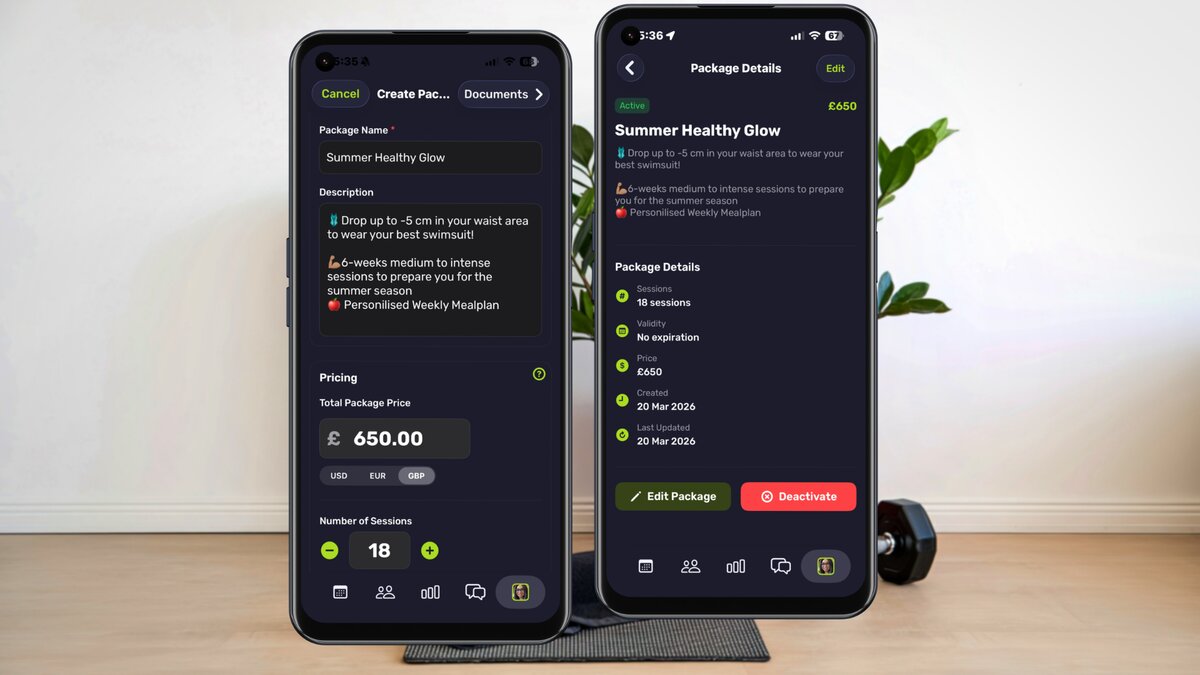
The biggest mistake trainers make is pricing their service by the hour. Clients do not pay for your time. They pay for the outcome you deliver.
A client who loses 15kg and runs their first 5K does not care whether that took you 3 hours a month or 10 hours a month to achieve.
Price on the transformation, not the transaction.
When you frame your offer around outcomes — “I help busy professionals drop two dress sizes in 12 weeks” — price resistance drops significantly. You are no longer competing on hourly rate; you are competing on believability and results.
How to Set Your Starting Price
If you are just starting out, do not start at zero. Starting at £0 trains clients to devalue your work. Instead:
- Identify your niche and the transformation you deliver
- Research what others in that niche charge (not what generalists charge). Ask Gymbile team's advice if you are stuck
- Set a price that feels slightly uncomfortable — if it feels easy, it is too low
- Offer your first 3–5 clients a “foundation price” with the explicit understanding it will increase
Your pricing should increase every 6–12 months as your track record builds.
Packages vs Pay-As-You-Go
Package pricing wins almost every time. Monthly retainers create predictable income, reduce client churn, and allow you to deliver better results because you are thinking in programmes rather than individual sessions.
A 12-week transformation package priced at £450–600 (paid upfront or in two instalments) is easier to manage and more profitable than £50/session pay-as-you-go.
Gymbile is built around subscription coaching — giving you the tools to run packages, automate check-ins, and deliver results at scale without drowning in admin. Join Gymbile and set your rates today.
Share this article
In this article
Tags
⚡ For Trainers
Start taking live sessions — with zero monthly fees.
- ✓ Set your own rates
- ✓ Clients book & pay instantly
- ✓ £0 platform subscription
- ✓ 100+ countries
No credit card required to get started.
Become a Trainer →Tags
⚡ For Trainers
Start taking live sessions — with zero monthly fees.
- ✓ Set your own rates
- ✓ Clients book & pay instantly
- ✓ £0 platform subscription
- ✓ 100+ countries
No credit card required to get started.
Become a Trainer →Keep Reading
 Rehabilitation
Your GP just cleared you for exercise. That doesn't mean you're ready.
Returning to exercise after birth? Here is how to do it right.
 Training Tips
You've Been Paying For A Gym You Don't Need
The gym is optional. Here's what actually drives fat loss.
 Training Tips
How Long Does It Take to See Results From a Personal Trainer?
Realistic timelines for strength, muscle, fat loss — and what slows you down.
Comments
Be the first to join the conversation
Sign in to share your thoughts on this article.
Sign in to comment